Monday, 17 December 2012

Nuggets From The Nizam’s Land – Hyderabad

Hyderabad showcases the royal life of the Nawabs and there is no end to the sightseeing places here. The Hyderabadi Biryani is sure to make you visit this place again!
Located in the southern peninsular region of India, Hyderabad is one of the leading cities in the country. It displays a perfect blend of modernisation while retaining its rich and ancient charm and grandeur at the same time. The name Hyderabad means ‘the city of Nizams’. Nizams were the Muslim rulers of the Deccan region and were considered to be one of the wealthiest rulers, which is aptly reflected in the city’s grandeur. It is one of the four most important cities of southern India. It boasts of a rich and cosmopolitan lifestyle. With the onset of the great economic reforms in the country during the last decade of the twentieth century, Hyderabad became one of the leading Information Technology hubs of the country. The city has a vibrant tourism industry with tourists flocking to the deccan city all around the year. The old city boasts of some ancient architectural marvels like forts, palaces, museums while the new city has modern places like shopping malls, parks , science centres.

Must See Places


A trip to Hyderabad should take you around four days to cover almost every part of the city within an easy schedule. The best way is to divide your trip properly. On Day One you can take a tour of the old city alone with visits to the Golconda fort, The Charminar, Salar Jung museum, the Falaknuma Palace, Toli masjid etc. The old city has a lot of museums which display the might and the richness of the early rulers of the city. The museums display the wardrobes of the Nizam queens and kings and their jewellery collection which are worth millions of dollars in value. You can take a package tour or travel on your own using the public transport system or by hiring a local travel cab. In the evening you can take a stroll around the nearby shopping areas enjoying the evening breeze.

Other Attractions


On the second day you can tour the new city with visits to the Archival museum, Birla planetarium and science centre, Birla Mandir, Nehru zoological Park and in the evening you should visit the Hussain Sagar lake which is an artificial lake. It has a huge statue of Buddha in the middle and in the evening when the lights take effect it is a splendour to watch. The best way to tour the new city is to travel on your own hiring a cab for the entire day. A trip to Hyderabad is incomplete without a visit to the Ramoji Film city, which is largest integrated film studio in the world. It will take you one full day to cover the entire studio. There is a special bus that takes you around the studio. You can see some extravagant sets built for film shooting. The fourth day is just an optional one for you to cover places if you have missed out and for some light shopping around the city. There are a lot of malls with cafeteria, food courts and movie theatres in it.

Reaching There


Due to its tropical climate the best time to visit Hyderabad will be either during the months of November to February or during the month of April before the summer heat picks up. Hyderabad is extremely well connected to all the major cities within the country and also to major international cities. The Rajeev Gandhi International airport is the only airport in the city which handles all international and domestic flights. This airport is one of best in the country and the earliest to undergo a modernisation programme in the country as part of India’s growing economy. The airport is well connected by buses, cabs and autos to all major points in the city. There are three railway stations in Hyderabad that connect to almost every part of the country. It is well connected by road from cities like Mumbai, Chennai and Bangalore.

Food & Accommodation


Hyderabad offers you a variety of cuisines the famous being the ‘Hyderabadi Dhum Biriyani’. There are lot of multi cuisine restaurants and some dedicated vegetarian restaurants as well. You have hotels in all ranges from budget to medium to high end five star hotel which are located at prime points so as to help tourist navigate around the city easily. The approximate budget for a couple touring including travel to the city, food, accommodation, travelling within the city and other miscellaneous expenses will come up to about anything between 10,000 to 13,000 INR. So pack up, head to Hyderabad, and have the trip of a lifetime!
 

hyderabad - sights and sounds

charminar

Charminar, the edifice of four minarets, is the legendary masterpiece of the Qutb Shahis. The awesome rectangular structure was built upon four grand arches by Muhammad Quli Qutb Shah in 1591 to commemorate the end of the plague.
The plan is a square, each side 20 meters long, while the four arches are 11 meters wide and rise 20 meters from the plinth. The four storied minarets rise 20 meters from the roof of the massive monument and measures 24 meters from the plinth. The western section of the roof contains a mosque with 45 prayer spaces with a large open space in front to accommodate more for Friday prayers. To the east of this space is a veranda with a large open arch in the centre, flanked by smaller ones both side.


Founded originally by the Kakatiyas in the 13th century, the existing structure was expanded by the Qutb Shahi kings into a massive fort of granite with walls and ramparts extending some 7kms in circumference. The fortress city within the walls was famous for the diamond trade and the Koh-i-noor diamond is said to have come from here.

This is the biggest mosque in Hyderabad and lies 100 yards south-west of Charminar. The name is derived from the Grand Mosque at Mecca on which it is patterned. The hall is 67 meters by 54 meters and 23 meters high. The roof is supported by 15 arches, five on each of the three sides. The western side is blocked by a high wall to provide the Mehrab. At each end are two huge octagonal columns made out of a single piece of granite each topped by an arched gallery that is crowned by a dome. The mosque is one of the largest in India and can accommodate ten thousand people at a time.

The tombs erected in the memory of the departed kings of Golconda are truly magnificent monuments that have stood the test of time and the vagaries of nature. They stand a kilometre north of Golconda fort's Banjara Darwaza.

Built by one of the Paigh nobles Sir Vicar ul Umra, and later bought by the Nizam, the Falaknuma Palace (meaning "Mirror in the Sky") is 5km south of the Charminar. This palace was designed by an Italian architect and houses some rare treasures collected by the Nizam.
 
salarjung museum

A collection of art objects by Nawab Salar Jung III, this museum houses magnificent exhibits of European and Indian paintings and statuary. Of special interest is the Jade Room containing priceless objects which belonged to ancient Indian rulers like Aurangzeb and Tipu Sultan.

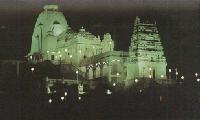
Overlooking the Tank Bund, the Birla Mandir presents an arresting sight when illuminated in the evening. This magnificent structure built entirely out of marble from Rajasthan, stands atop the Kala Pahad, the twin hillock of the Naubat Pahad. Built by a Birla Foundation over a span of ten years, the main temple is dedicated to Lord Venkateshwara.

Hyderabad's most popular promenade, the Tank Bund dams the Hussain Sagar lake. It is lined with 33 statues of famous personalities of the state. Recently installed is the monolith of Buddha at the centre of the lake. This lake is the venue of many water sport events.

In the heart of the city is the B.M. Birla Planetarium, one of the newest and the most modern in India. It is being developed into a centre for the study of astronomy.

This zoo spreads over 300 acres and is one of the largest in Asia. Over 3000 different species of birds and animals can be seen here. It has a unique nocturnal zoo which houses animals not normally seen during the day. The Natural History Museum has rare and interesting exhibits. Large recreational parks, gardens, a mini train and animal rides, make it an ideal spot for a picnic.

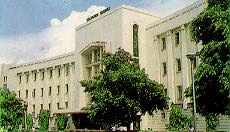
Originally called the Bagh-e-aam, it consists of well laid out gardens. It also houses the imposing State Legislative Assembly building, the Jubilee Hall, the Jawahar Bal Bhavan, the Health Museum and the State Archaeological Museum.

The street leading from Charminar to the square on the west called the Chowk, is known as Lad Bazaar. It is a shopping centre of the old city specialising in bridal ware. Here you will find the famous glass bangles of Hyderabad. Midway to the Chowk on the left, you will marvel at the splendid pink gates and semi-circular outer walls of the Nizam's Jillukhana (Parade Grounds) built in the French-Islamic style during Nizam VI reign. The troops were quartered here and the large gateway facilitated the easy movement of elephants.

Some light reading: books on hyderabad

The Nocturnal Court: The Life of a Prince of Hyderabad

Translated from the Urdu diary of the poet-courtier Sidq Jaisi, this is a first-hand account of life in the court of the last Nizam of Hyderabad. It recounts the splendor and decay of court life in the early twentieth century.

Set in and around Hyderabad at the beginning of the nineteenth century, White Mughals tells the story of the improbably romantic love affair and marriage between James Achilles Kirkpatrick, a rising star in the East India Company, and Khair-un-Nisa, a Hyderabadi princess. Pursuing Kirkpatrick's passionate affair through the archives across the continents, Dalrymple unveils a fascinating story of intrigue and love that breaches the conventional boundaries of empire. As Kirkpatrick gradually goes native (adopting local clothes) he becomes a secret agent working for his wife's royal family against the English, as he tries to balance the interests of both cultures.

This is the story of the incalculable wealth of the Asaf Jah dynasty. Wealth that has lain concealed in the darkness of a bank vault for over 50 years. It is the study and documentation of gemstones and jewels that few people have had the opportunity to see and handle. The collection of jewels of the Nizam's of Hyderabad is one of the finest in the world. In addition to turban ornaments, gem-set and enamelled necklaces, earrings, armbands, bracelets, belts and other items of jewellery, it includes twenty-two unset emeralds and the fabled 184.50 carat Jacob Diamond - a magnificent South African gem believed to have been used by the last Nizam as a paperweight! After the integration of Hyderabad state into the Union of India in 1950. Nizam Mir Osman Ali Khan instituted a jewellery trust to which he assigned the most important items from the Hyderabad treasury, with the stipulation that they could only be sold after his death. In the nearly three decades since 1972 (when the collection was first offered to the government of India), the unfolding drama of the Nizam's jewels entailed court cases, tantrums, intrigue, conflicting decisions and colossal expenses. The Jewels of the Nizam's documents this unique group of jewels that give credence to legends, apocryphal tales and fading memories of a fabulously wealthy dynasty that ruled the Deccan for seven generations.


This book is a comparative study of Hyderabadi emigrants settling in Pakistan, the United Kingdom, Australia, the United States, Canada, Kuwait, and the United Arab Emirates at the end of the twentieth century. Based on ten years of fieldwork and extensive interviews, it traces Hyderabadi culture and institutions in these places of settlement, looking at the different versions of Hyderabadi history transmitted and the personal networks and collective bodies formed abroad. Hyderabad, Islamic, and Urdu associations, in addition to other groups are surveyed, as are the marriages of the migrants and the subsequent generations.

The author shows how memories of old Hyderabad are retained, redefined, or discarded depending on generation, gender, class, and connections to the Nizam's former state of Hyderabad and the national narratives of the new sites of settlement. Throughout the book, she emphasizes the role of the state in identity formation, the importance of language and religion for retention and reformulation of identities, and the instability of diasporic communities both within and across national boundaries.


A day does not pass without a newspaper report about yet another company that has started outsourcing technology or other business processes to India. The Senate recently voted 70 to 26 in favor of preventing federal contracts going offshore, yet US managers continue to beat a path to India because it is the global leader for offshore IT-enabled services. Many CEOs seek to reduce their costs or improve service quality, but not many understand India on their first visit and some are confused by the culture.

In this book author Mark Kobayashi-Hillary introduces India and the major players in the Indian service industry. He offers a balanced view on the trend to outsource to India, describing the reasons why a business should utilize India as an offshore outsourcing destination and the steps needed to find and work with a local partner. Not only does the book make a compelling economic case for outsourcing to this region, it also discusses how to manage the entire transition process, including the potential impact on local resources.

Mark Kobayashi-Hillary is a British writer and independent outsourcing consultant based in London. He has worked at a senior level for several leading banking and technology groups and has been involved in managing outsourced relationships in the UK, Singapore and India. He is a regular commentator on India and outsourcing in the European press.

Outsourcing To India is written from personal experience and several years of research. This practical guide will help managers navigate through the offshore outsourcing maze, allowing them to avoid many of the major pitfalls others have faced when setting up shop in India.

Yummmmmm - hyderabadi cuisine

http://www.hyderabad.co.uk/cuisine.htm

hyderabadi cuisine

In Hyderabad's 400 year history the Hyderabadi cuisine has, like its culture, stood high and unmatched by any other state in India. In fact Hyderabad was known for the spectacular way its aristocracy entertained. The feast at these banquets usually contained a selection of Mughlai dishes which would be decorated with varq (a very fine pure silver leaf).
Below are some of the more traditional Hyderabadi dishes which were probably served 400 years ago, and still served today


Lamb and Rice dish - A traditional celebration meal
Ingredients: (serves 6)
2lbsSpring lamb (cleaned, cut into medium size pieces)
4ozsNatural yoghurt
4ozsPure ghee (clarified butter)
1lbBasmati rice (washed)
4ozsOnions (sliced finely)
1ozGinger & garlic (equal amounts crushed)
1Juice of 1 lemon
1ozAlmonds (ground)
2Cinnamon sticks
4-6Cardamon whole
1ozMilk
1/4 tspSaffron
2-3Green chillies
1/2 tspCumin seeds
2-3Cloves
1/2 tspGaram masala (equal amounts of Black Zeera, Cardamoms & Cinnamon sticks, with half amount of cloves)
-Salt to taste
-Coriander and fried onions to garnish

Method:

In a large bowl mix the meat, yoghurt, almonds, chopped green chillies, ginger and garlic, salt, and ground garam masala. To the mixture add half a teaspoon each of chilli powder and turmeric. Marinate for at least 4-6 hours in the fridge.

Fry the onions in ghee until golden brown and crisp. Drain away any excess ghee and then remove the onions and spread over a large plate. This should keep the onions crispy. Once they have cooled crush the onions with your fingers and add this to the marinated meat mixture.

In a large pan half fill with water and add salt, whole garam masala and one green chilli. Bring this to the boil and add the washed rice and cook until the water boils. Once the water has boiled drain the rice in a colander and rinse with a little cold water.

Grease the saucepan generously with ghee and transfer the meat mixture. Level the surface and now spread the rice evenly over the meat. Squeeze the lemon and pour the juice over the rice. Warm the milk and crush the saffron into it. Pour the milk/saffron mixture over the rice. Dot generously with ghee. To garnish spread the fried onions and coriander over the rice.

Cover the saucepan tightly. Allow to steam on high heat for about 10 minutes and then lower the heat and cook for another 1 and a half to 2 hours. Before removing the pan from the cooker ensure that there is no moisture left in the meat. This can be checked by simply listening for a sizzling sound. If there is no sizzling then the Biryani is ready.

Biryani is traditionally served with Mirch Salan and Yoghurt Chutney (simply combine finely chopped onions, chillies and coriander to natural yoghurt - mix well and season to taste).

Recipe compliments of Mrs. Qudsia Shafiuddin

Chilli Curry - usually accompanies Biryani
Ingredients: (serves 4)
250gmsLarge/long green chillies/hot peppers
50mpCooking oil
30gmsTamarind pulp
100gmsNatural yoghurt
2tbsLemon juice
-Salt to taste
For salaan paste:
250gmsRoasted onions
35gmsRoasted peanuts
35gmsCoconut
20gmsGinger & garlic paste
5gmsSesame seeds
-A sprig of coriander leaves

Method:
Deep fry green chillies in hot oil. Remove and keep aside. Grind together desiccated coconut, garlic, ginger, sesame seeds, roasted onions and peanuts to make a fine paste. Reheat oil already used for frying chillies. Ensure that the paste does not stick to the pan. Fry the salan paste for 20 minutes, keep stirring. Pour 15 ml of water at regular intervals.

Add yoghurt and salt and stir for 3-4 minutes. Now add the tamarind pulp and 15 ml of water. Stir for 5 minutes until the gravy is of sauce consistency and ensure that it does not stick to the pan.

Add the fried chillies to the hot gravy. Let the gravy come to a boil. Remove and garnish with finely chopped coriander leaves.

Serve hot with biryani/pulao/pilaf.

Chicken Curry
Ingredients: (serves 8)
2kgChicken pieces
500gmsNatural yoghurt
100gmsCoconut
1KgOnion
2tspGaram Masala
1/2tspPepper powder
100gmsGinger-garlic paste
50gmsFresh green chillies
1tspTurmeric powder (Haldi)
2tspCoriander powder
300gmsCooking oil
1Cup water
-A sprig each of coriander and mint
-Salt to taste

Method:
Chop the onions into fine slices and fry them till golden brown. Marinate the chicken pieces for 10 minutes in 2 tsp of salt (salt to taste) turmeric powder, garam masala, coriander powder and ginger-garlic paste.

Fry onions until golden brown and then add the marinated chicken pieces. After 10 minutes add the whipped yoghurt and a cup of water and stir well. Cook for 5 minutes.

Then add the desiccated coconut, pepper powder, chopped coriander and mint leaves. Cover and allow to cook for 15 minutes.

Beat served with fresh parathas or roti.

Hyderabadi Porridge - a local favorite
Ingredients:
200gmsWheat (whole)
300gmsBoneless mutton
20gmsFresh green chillies
2" pieceGinger
6-8 flakesGarlic
100gmsCooking oil
3 mediumOnions (sliced)
2 mediumLime
1/2tspTurmeric powder (Haldi)
2tspGaram Masala
-Salt to taste

Method:
De-bran the wheat, wash and soak for 2 hours.
Clean and marinate mutton with half of ground paste of ginger, garlic, green chillies and salt for 1 hour.
Pressure cook the soaked wheat and marinated meat for about 45 minutes. Mince and grind to a fine paste.
In a Pan heat oil, add the finely sliced onions, fry till brown, add the spices.
Add the ground paste and keep stirring occasionally. On slow flame, till the mixture leaves the sides of the pan. Adjust the seasoning. Serve hot, with lime wedges coriander and fried onions as garnish.

Vermicelli Pudding - Another celebration special
Ingredients: (serves 4-6)
100gmsVermicelli
1500mlMilk
250gmsSugar
50gmsCashew nuts (chopped)
50gmsAlmonds (soaked and chopped)
50gmsDates (chopped)
6Cardamoms (crushed)
4tspPure ghee (clarified butter)
250mlWater

Method:
Fry the nuts in 2 tsp of clarified butter. Make a sugar syrup (one string consistency). Fry the vermicelli in the remaining clarified butter until golden brown.

Boil the milk until it is thickened to half the quantity. Add the fried vermicelli to the milk and cook. Do not allow lumps to form. Add sugar syrup and cook for a while until it comes to a homogeneous consistency. Sprinkle cardamom powder. Garnish with fried nuts.

Serve hot or refrigerated.

Bread Pudding
Ingredients:
1Loaf of white bread (sliced)
1litreMilk
500gmsSugar
250gmsDouble cream
250gmsPure ghee (clarified butter)
100gmsChopped & roasted cashew nuts
100gmsAlmonds (soaked and chopped)
10gmSaffron
5Cardamoms (crushed)

Method:
Cut each bread slice into four pieces. Fry them in clarified butter till golden brown. Make a sugar syrup by adding half a litre of water to the sugar and boil it for 15 minutes. Add the powdered cardamom and the saffron dissolved in milk to the sugar syrup. Boil milk until it is thickened.

Arrange the fried bread pieces on a flat tray and sprinkle the chopped nuts on them. Pour the sugar syrup, double cream and milk alternately over the bread pieces while they are still hot.

Refrigerate and serve as dessert.

Carrot Pudding
Ingrdients (serves 6)
2kgCarrots
1litreMilk
500gmsSugar
500gmsPure ghee (clarified butter)
50gmsChopped & fried cashew nuts
50gmsAlmonds (soaked and chopped)

Method:
Peel and grate the carrots fine. Fry the grated carrots in 4 tbsp of clarified butter. When the carrot is fried well, add milk and cook for a further 15 minutes. Add the remaining clarified butter. Garnish with nuts.

Serve hot or refrigerated.

Apricot Pudding - A favorite at weddings
Ingredients:
200gmsApricots (whole/dried)
60gmsSugar
50mlFresh cream
300mlWater

Method:
Wash and soak the apricots in hot water for 15 minutes. Mash and stone the apricots. Break open the stone and remove the nuts.
Heat the mixture of apricot and nuts until it starts thickening.
Add sugar and cook for another 2 minutes. Allow the mixture to chill. Traditionally served with fresh cream or plain custard.

hyderabad on the Net - Timeline of hyderabad: Here you go history Buffs a overview of our past!

The World Period Historical Event Architectural & Cultural
Contribution
1 BC to AD 3
Satavahanas (North Deccan)
4 AD - 5 AD
Vakatakas of Vidarbha
5 AD - 6 AD
Vishnukundis of Andhra
c. 556-757 Chalukyas of Vatapi (West & Central Deccan
c. 630-970 Eastern Chalukyas of Vengi (Andhra Pradesh)
c. 753-973 Rashtrakutras (West & Central Deccan)
c. 973-1189 Chalukyas of Kalyani (West & Central Deccan)
c. 1100-1327 Hoysalas of Dvarasamudra (Central & South Deccan
c. 1190-1294 Yadavas of Devagiri (North Deccan)
1310-1346 Khaljis and Tughluq invasions The invasions resulted in the ultimate decline of the three most important ruling dynasties and paved the way for the Vijayangar in the Tungabhadra region and the Bahmani Kingdom in northern Deccan.
1347-1526 Takes possession of Golconda Fort

During the reign of Sultan Mohammad Shah Bahmani (1358-1375) Raja Krishna Dev, a Kakatiya King of Warangal, handed over the mud fort, then called Mankal, to Muhammad Shah Bahani of Gulbarga under a pact.

Qutb Shahi Dynasty
1495Sultan Quli Qutbul MulkHigh ranking Turkish officer made Subedar of Telengana.

Sultan Quli made his headquarters in Golconda. He strenghthened it with granite fortifications. According to legend the name Golconda was derived by combining the names of two of the sultans most loyal courtiers, Gulla and Kuntiah.
1518Qutb Shahi Dynasty founded With the disintegration of the Bahmani Kingdom, Sultan Quli assumed independence and founded the Qutb Shahi Dynasty.
At the age of 99 he was killed by his son Jamsheed Quli.

Sultan Quli uilt a massive citadel called Muhammadnagar, well known for its trade in diamonds and precious stones.
Masjid Safa at Golconda is the first Qutb Shahi mosque of Hyderabad. Twenty five years later Sultan Quli was assassinated by Mir Mahmud Hamadani, Qiladar of Golconda at he instigation of the heir apparent Jamsheed Quli Qutb Shah.
Babur 1st Mogul Emperor of India1526
Humayan 2nd Mogul Emperor of India1530
Death of Guru Nanak1538
1543Jamsheed Quli Qutb Shah Third son of Sultan Quli who ruled for 7 years and died in 1550 of an incurable disease
1550Subhan Quli Qutb Shah Jamshhed Quli’s son was thrust upon the throne at the age of 7. After 7 months his paternal Uncle Ibrahim Qutb Shah swept his nephew aside
Ibrahim Quli Qutb Shah During his exile with the Raja of Vijayangar Ibrahim learnt to love Telugu. During his reign he patronised and encouraged the learning and writing of Telugu

Golconda was further streghthened.
Akbar 3rd Mogul Emperor of India1556
1562Husain Sagar (Tank Bund) Built by the Sufi saint Husain Shah Wali (son-in-law to Ibrhaim Quli), on a tributary of the Musi River. It links the cities of Hyderabad abd Secunderabad. There are 2 sarais (rest houses) on either side and four sluices to regulate the level of water in the tank.
1578Purana Pul Bridge completed Built by Sutan Ibrahim Qutb Shah the bridge has 22 arches, is 600ft long, 35ft broad and 54ft above the river bed.
1580Muhammad Quli Qutb Shah During Muhammad Quli’s long, peaceful and prosperous reign the Dynasty reached it’s Zenith.

Built the city of Hyderabad to accommodate the surplus population of Golconda – According to legend the King built it for the love of the beautiful Bhagmati whom he titled “Hyder Mahal”. The city was then named after her.
“Let millions of men and Women of all Castes, Creeds and Religions make it their Abode, Like Fish in the Ocean” – Prayer of Sultan Mohammed Quli Qutb Shah, while laying the foundations of Hyderabad.
The fifth King planned Hyderabad as an ‘open city’. It was to have no walls. The Qutb Shahis already had their well-fortified Golcnda Fort to fall back upon at times of need.
Vajihi, an Urdu poet in his court wrote the famous work Lila Majnu
1585Mir Momin made Peshwa (PM) Mir Momin came from Persia and was known for his learning, piety and poetry. He was an architect and lover of culture and associated with the layout of the city. At the steps of his mausoleum was buried the famous poet of Emperor Aurangzeb, Mirza Ahmed Niamath Khan Ali.
1591Charminar completed Inadequacy of water, and frequent epidemics of plague and Cholera persuaded the fifth Quli Qutub Shahi ruler to venture outward to establish the new city with the Charminar at its centre and with four great roads fanning out in the four cardinal directions.

Built during 1591-92 to a height of 56.7meters, on a square base of 31.5metres. Charminar is said to be a protype of Tazia, a representation of the tomb of Imam Husain
1594Badshahi Ashur Khana
1594Charkana (Four Arches)
1595 Darush – Shifa (House of Cure)
1598Jamay Masjid
Gunpowder Plot
Jahanghir 4th Mogul Emperor of India
1605
1612Sultan Muhammad Qutb Shah Scholar, deeply religious and a connoisseur of good books.
1617Mecca Masjid Sultan Muhammad Qutb Shah begun the building of the mosque which was completed 77years later by Aurangzeb.The largest mosque in Hyderabad it is paaterned from the Grand Mosque in Mecca under the direction of Daroga Mir Faizullah Baig and Choudhary Rangaih. The marble graves of the Asif Jahi ruler lie at the southern end.
Sultan Nagar
The Qutb Shah Chronicles
Voyage of the Mayflower1620
Charles I – King of England1625Daira Mir Momin
1626Abdullah Qutb Shah Ascended the throne at the age of 12. The Kingdom was extended during his rule.

Hayath Nagar Mosque built by Hayath Bakshi Begum. The mosque has 5 double arches and 2 minarets. The extensive courtyard is surrounded by several hundred double rooms known as “Sarai of Ma Saheba” for the use of travellers. Within the courtyard lies the “Hati Bauli” (Elephant Well) formerly drawn by elephants.
Taj Mahal1631 In the royal palace of Hayath Nagar, was celebrated the first shave the seventh King, Abdullah Qutb Shah for 12 days.
1636Hyderabad came under Mughal pressure
1645Tavernier chronicled the diamond industry of Golconda The Koh-I-noor was found in Kollur near the River Krishna in 1656.
1656Golconda attacked by Mughal army
Aurangzeb 5th Mogul Emperor of India1658-1707
1666Hayath Bakshi Begum dies Only daughter o fthe 5th King, wife of the 6th King and Mother of the seventh King.

Ma Saheb Tank (1624), Husaini Alam, Bibi Ka Chasma, Langar, Hayath Nagar Mosque were all built in her memory.
She also built the Khairatabad Mosque for her tutor Akhund Mulla Abdul Malik. Akhund built a tomb opposite the mosque which lies vacant as he died in Mecca.
1672Abul Hasan Tana Shah Staunch defender against Moghul might. A Benign and tolerant King. In 1687 he was taken prisoner by Aurangzeb and died after 12 years of captivity.
Jan Sapar Khan, a noble of Aurangzeb was made govenor of Deccan.

Kalamkari, the art of textile painting flourished in a place called Masuilpatnam.
Minature painting incorporated both Hindu and Islamic traditions resulting in the birth of a Deccani tradition.
Abul Hasan granted a village , Kuchipudi to a Brahim because he was good at presenting dance dramas. Today Kuchipudi is one of the classical dance forms of India
1678Miyan Mishk Masjid
1684Syed Shah Raju II (Syed Shah Raziuddin) dies Shah Raju was a nephew of Husain Shah Wali. Abul Hasan Tana Shah was his devoted disciple and built a splendid dome over his grave.
1687Aurangzeb Mogul Army besiege Golconda Under Aurangzeb’s ambitions to expand the Mogul Empire, Chin Qalich Khan led an attack into the Deccan and later died from his wounds.
After eight months of trying to penetrate the sturdy walls and territory of Golconda, Abdullah Khan Pani treacherously opened one of the gates (Fateh Darwaza) to let in the Mogul invaders.

Azhdaha Paikur Gun used during the siege of Golconda by Aurangzeb’s army lies on the Musa Burj, southeast of Golconda Fort.
Fateh Maidan is where Aurangzeb pitched his first camp on his victorious campaign against Golconda
1694Mecca Masjid completed
1699End of Qutb Shahi Kings
Advent of Mogul Rule
Mubrez Khan was the last Mogul Subedar.

City wall and gates built during Mogul rule

Asif Jahi Dynasty
Mir Qamaruddin new title “Chin Fateh Khan”
Farruksiyar, Mogul Emperor1713-1719Mir Qamaruddin new title “Nizam-ul-Mulk Fateh Jung Farruksiyar conferred on Mir Qamaruddin the tiltle of Nizam-ul-Mulk Fateh Jung (Regulator of the Realm.
1724Nizam-ul-Mulk given the title of Asif Jah declares independence While the Subedar of Malwa the Delhi court secretly instructed Mubrez Khan, the Subedar of Deccan to oppose him. Mubrez Khan was defeated in battle and established Asif Jah’s supremacy in the Deccan.

Aruangabad becomes the capital of the State. Hyderabad Dominion expanded by waging a struggle against the Marhattas and by the policy of non-involvement in the rivalry for power between the British and the French.
1756French enter Hyderabad The French forces entered Hyderabad in order to install an Asaf Jahi Ruler of their choice. In the end the choice of the British that prevailed. Meanwhile in 1756, French General Monsieur Bussy had occupied the Charminar for a few days.
George III King of England1760
1763Nizam Ali Khan Second Nizam Ali Khan ascended the throne. He ruled for 41 years and employed the French adventurer Monsieur Raymond.
Captain James Cook expedition to Australia1768
1769Hyderabad becomes capital of the State
1803Sikander Jah Third Nizam ruled for 26 years and appointed Mir Alam as his Prime Minister who was responsible for marinating good relations with the British.

End of the war with the Marhattas.

Secunderabad was named after the third Nizam. Originally established as a cantonment after 1798 when a subsidiary alliance for military and political cooperation was signed between the Nizam and the British East India company.
1809Munir-ul-Mulk appointed Prime Minister Munir was the son of Mir Alam.

William Palmer & Co, a banking house introduced in Hyderabad by the British. Due to overspending and heavy borrowing from the bank the finances of the State were in a bad shape.
French Conquests of Algeria1829Nasir-ud-Duala Fourth Nizam ruled for 28 years
1830
1846Church of the Holy Trinity Built The Church was built with a contribution from the private purse of Queen Victoria.
1853Salar Jung appointed PM Salar Jung appointed several reforms to improve the finances of the Dominion.
1857Afzal-ud-Daula Fifth Nizam ruled for 12 years.

Afzal Gurj Bridge

Afzal Gurj Mosque
1869Mir Mahboob Ali Khan Sixth Nizam ascended the throne at the age of 3 and ruled for 42 years. AKA Mahboob Ali Pasha he was installed as the masnad by the British Resident and Sir Salar Jung, who also acted as the co-regent.
Queen Victoria declared Empress of India 1876
1883Salar Jung dies
1893Urdu official language Persian was the official language up to 1893 and then Urdu up to 1948.
1908Floods wash away city wall.
1911Mir Osman Ali Khan Seventh Nizam ruled for 37 years. Made Honorary Lt. General of the British Army.
Elevated by King George V from “His Highness” to “His Exalted Highness”.
Title of “Faithful Ally of the British Government was conferred on him.
A 21 gun salute signalled his arrival in Britain (Other rulers were only entitled to 19 guns).
He led a simple life but was one of the richest men in the world.
India gained Independence and Partition1947
1948Hyderabad State merged with the Indian Union
Operation Polo (Police Action)
1956Hyderabad becomes capital of Andhra Pradesh On November 1,1956 the map of India was redrawn into linguistic states
1967Nizam VII dies

Copyright (C) 2008: Asif Shafiuddin (www.hyderabad.co.uk)

Is cheese healthy? Food fight answers

Pros: Say Cheese!
Cheese packs nine essential nutrients, including calcium, into a tiny wedge.
The most consumed cheeses in Canada are cheddar and mozzarella. A 50-g hunk of cheddar contains a whopping 361 mg of calcium. That beats the 320 mg of calcium in a cup of milk, and is roughly 36 per cent of an adult’s daily calcium requirement, according to Heidi Boyd, registered dietitian with the Dairy Farmers of Canada.
It’s also a great source of protein. One serving of cheddar contains about 12 g of protein, not a lot less than the same amount of T-bone steak, which contains approximately 15 g of protein.
Cheese is a significant source of vitamin A, which is vital for bone and tooth development, vision at night, healthy skin and hair.
It’s high in phosphorus, which promotes bone and tooth health, vitamin B12, which aids in red blood cell formation and zinc, which helps form our bones and tissues and convert food into energy. And it’s a source of potassium, which helps lower our blood pressure and improves muscle function.
And there’s good news for the lactose intolerant. The amount of lactose varies from cheese to cheese — brie, mozzarella, aged cheddar, parmesan and Swiss contain only trace amounts.
Cons: Give it to the mouse
Cheese can be very high in fat. Consuming half a small wheel of brie, which is often 50 per cent fat, is equivalent to consuming half a stick of butter, says registered dietitian Shauna Lindzon.
No matter which way you slice it, most cheese is also high in sodium, which can raise blood pressure, and saturated fat, which can raise blood cholesterol levels, Lindzon says.
But studies also show that despite those individual issues, people who eat cheese have a lower risk of heart disease, stroke and cardiovascular events.
Beware of processed cheese, which can have added fat, salt, chemicals and be of dubious quality.
And pregnant woman should avoid unpasteurized cheeses.
Bottom Line
Indulge! Cheese is nutritious. But a little goes a long way.
Cheese, despite all that’s good about it, is still very fattening. Snack in small amounts, says Lindzon. Shred, melt and sprinkle your cheese to make a small hunk last longer. And try spicy varieties, such as jalapeno havarti, because the flavour punch makes you want to eat less.
Canada’s Food Guide recommends adults, aged 19 to 50, eat two servings of milk and alternatives a day, with a focus on lower-fat alternatives, like skim milk or light cheese.
In general, harder cheeses contain more calcium than softer varieties. And low fat options are healthier. Thanks to food technology, Lindzon says, low-fat cheese is tastier now than ever before.
Every week in Food Fight, we get to the bottom of a controversial food. Have a topic you'd like us to explore? Email life@thestar.ca and include the subject line “food fight.”

Serve oysters at your holiday party with these easy tips

http://www.theglobeandmail.com/life/holiday-guide/holiday-video/video-serve-oysters-at-your-holiday-party-with-these-easy-tips/article5924766/

To prepare an oyster platter, get them shucked at the fishmonger the day of the party, put them on ice and serve them on a cold tray. Garnish with lemons and grated horseradish or mignonette sauce. This traditional French sauce for oysters gives them a piquant flavour.
  • Ready time: 5 minutes
  • Servings: 3 hours including chilling time

Ingredients

36 oysters
1/4 cup red wine
1/4 cup red wine vinegar
2 tablespoons chopped shallots
2 teaspoons cracked peppercorns
1 teaspoon grated lemon rind

Method

Combine red wine, red wine vinegar, shallots, peppercorns and lemon rind and bring to a boil. Remove from heat. Let sit for 2 hours to concentrate the flavours. Chill before serving with oysters. Makes about 1/2 cup.

Suggested Wine Pairings

A sake martini is a fine theme cocktail for this appetizer (two parts gin or vodka to one part good sake, stirred not shaken). Sparkling wine is versatile and festive – I’d suggest Spanish cava or trendy prosecco from Italy. Grassy Chilean sauvignon blanc is a flexible and affordable white-wine option, while zippy, slightly chilled Beaujolais, the French red, won’t be a total disaster with oysters. Beer-wise, I’d opt for a slightly